Sentiment Analysis คืออะไร? คู่มือฉบับสมบูรณ์สำหรับผู้เริ่มต้น

เมื่อลูกค้าเขียนรีวิวว่า "สินค้าดีมาก ส่งเร็ว ประทับใจ!" ธุรกิจของคุณจะรู้โดยอัตโนมัติได้อย่างไรว่านี่คือฟีดแบ็กเชิงบวก? เมื่อมีความคิดเห็นนับพันบนโซเชียลมีเดียหลั่งไหลเข้ามาหลังจากเปิดตัวสินค้า คุณจะเข้าใจได้อย่างรวดเร็วว่าผู้คนชอบหรือไม่ชอบมันได้อย่างไร? คำตอบคือ Sentiment Analysis หรือการวิเคราะห์ความรู้สึก — หนึ่งในการประยุกต์ใช้ AI ที่มีประโยชน์มากที่สุดในธุรกิจปัจจุบัน
Sentiment Analysis คืออะไร?
Sentiment Analysis (หรือเรียกอีกชื่อว่า Opinion Mining หรือการขุดความคิดเห็น) คือเทคนิค AI ที่ระบุและดึงอารมณ์ ความคิดเห็น และทัศนคติจากข้อมูลข้อความโดยอัตโนมัติ มันใช้การประมวลผลภาษาธรรมชาติ (NLP) และ Machine Learning เพื่อพิจารณาว่าข้อความแสดงความรู้สึกเชิงบวก เชิงลบ หรือเป็นกลาง
ลองคิดว่า Sentiment Analysis เหมือนกับการมีผู้ช่วยนับพันคนที่สามารถอ่านและเข้าใจน้ำเสียงอารมณ์ที่อยู่เบื้องหลังทุกข้อความ รีวิว หรือความคิดเห็นที่ธุรกิจของคุณได้รับทันที
หลักการทำงานของ Sentiment Analysis:
- วิเคราะห์ ข้อมูลข้อความเพื่อระบุน้ำเสียงอารมณ์
- จำแนก ความคิดเห็นว่าเป็นบวก ลบ หรือเป็นกลาง
- แปลง ข้อมูลเชิงอัตวิสัยให้เป็นข้อมูลที่วัดได้
- ขยายขนาด เพื่อประมวลผลข้อความนับล้านโดยอัตโนมัติ
เปรียบเทียบง่ายๆ
ลองนึกภาพว่าคุณเป็นเจ้าของร้านอาหารและต้องการรู้ว่าลูกค้าคิดอย่างไร:
- วิธีแบบเดิม: อ่านทุกรีวิวด้วยตัวเอง ตัดสินความรู้สึก จดบันทึก
- Sentiment Analysis: AI อ่านรีวิวทั้งหมดทันทีและบอกคุณว่า "85% บวก, 10% เป็นกลาง, 5% ลบ"
AI ไม่ได้แค่นับคำสำคัญ — มันเข้าใจบริบท การประชด และแม้แต่ความรู้สึกผสมผสาน เช่น "อาหารอร่อยมากแต่บริการช้า"
Sentiment Analysis ทำงานอย่างไร
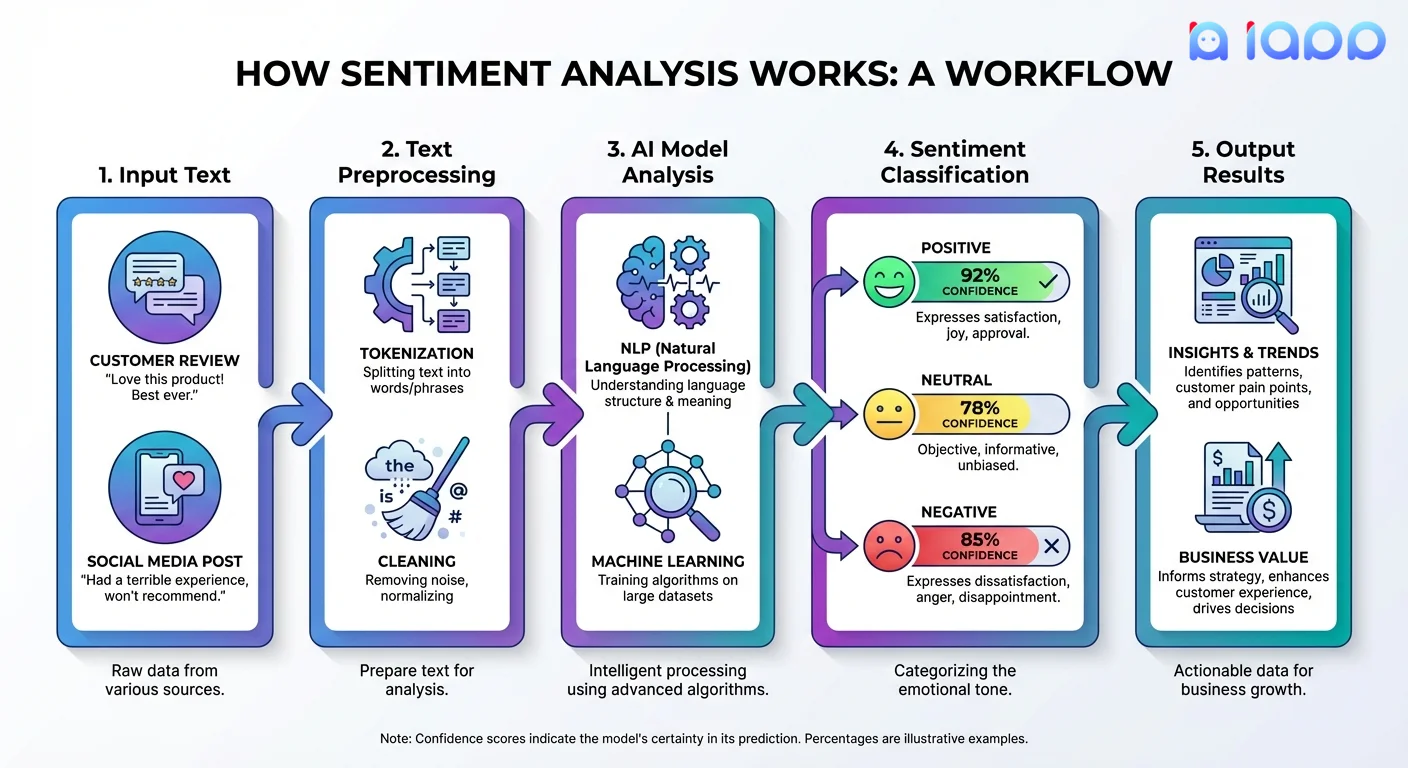
กระบวนการทีละขั้นตอน
1. การรวบรวมข้อมูล
- รวบรวมข้อความจากรีวิว โซเชียลมีเดีย แบบสำรวจ ตั๋วสนับสนุน
- สามารถจัดการข้อความเดียวหรือเอกสารนับล้าน
2. การเตรียมข้อความ (Preprocessing)
- Tokenization: แยกข้อความเป็นคำหรือวลีแต่ละตัว
- Cleaning: ลบสิ่งรบกวน อักขระพิเศษ คำหยุด
- Normalization: แปลงข้อความให้เป็นรูปแบบมาตรฐาน
3. การดึงคุณลักษณะ (Feature Extraction)
- แปลงข้อความเป็นตัวแทนตัวเลข
- ระบบสมัยใหม่ใช้ Word Embeddings หรือโมเดล Transformer
- จับความหมายเชิงความหมาย ไม่ใช่แค่คำสำคัญ
4. การจำแนกความรู้สึก
- โมเดล AI วิเคราะห์ข้อความที่ประมวลผลแล้ว
- กำหนดขั้วความรู้สึกและคะแนนความมั่นใจ
- อาจตรวจจับแง่มุมเฉพาะหรืออารมณ์
5. ผลลัพธ์
- ส่งคืนป้ายความรู้สึก (บวก/ลบ/เป็นกลาง)
- ให้คะแนนความมั่นใจ (เช่น บวก 85%)
- สามารถรวมรายละเอียดแยกตามแง่มุมหรืออารมณ์
ประเภทของ Sentiment Analysis
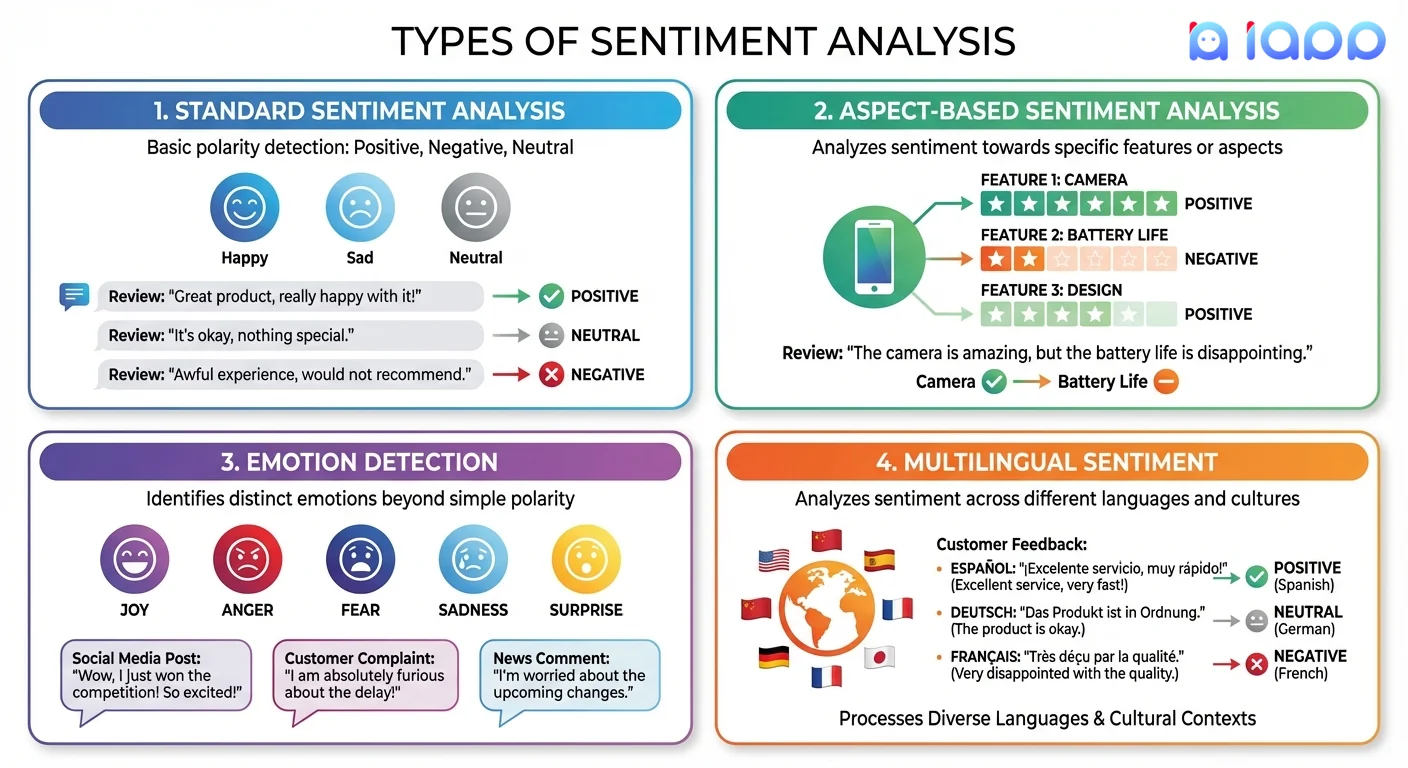
1. Standard Sentiment Analysis (การตรวจจับขั้ว)
ทำอะไร: จำแนกข้อความเป็นสามหมวดหมู่: บวก ลบ หรือเป็นกลาง
ตัวอย่าง:
- "ร้านนี้อาหารอร่อยมาก" → บวก
- "บริการแย่มาก รอนาน" → ลบ
- "ร้านเปิด 9 โมงเช้า" → เป็นกลาง
เหมาะสำหรับ: ภาพรวมความรู้สึกลูกค้าอย่างรวดเร็ว การให้คะแนนรีวิว การจำแนกฟีดแบ็ก
2. Aspect-Based Sentiment Analysis (ABSA)
ทำอะไร: ระบุความรู้สึกต่อแง่มุมหรือคุณลักษณะเฉพาะภายในข้อความ
ตัวอย่าง: รีวิว: "อาหารอร่อย แต่บริการช้ามาก ราคาเหมาะสม"
- คุณภาพอาหาร: บวก
- ความเร็วบริการ: ลบ
- ราคา: บวก
เหมาะสำหรับ: ฟีดแบ็กผลิตภัณฑ์ การประเมินบริการ ข้อมูลเชิงลึกลูกค้าโดยละเอียด
3. Emotion Detection (การตรวจจับอารมณ์)
ทำอะไร: ไปไกลกว่าบวก/ลบเพื่อระบุอารมณ์เฉพาะ เช่น ดีใจ โกรธ กลัว เศร้า หรือประหลาดใจ
ตัวอย่าง:
- "ตื่นเต้นมากกับสินค้าใหม่!" → ดีใจ/ตื่นเต้น
- "ผิดหวังมากที่ของไม่มาตามนัด" → ผิดหวัง/โกรธ
เหมาะสำหรับ: การวิเคราะห์ประสบการณ์ลูกค้า การรับรู้แบรนด์ การจัดการวิกฤต
4. Multilingual Sentiment Analysis (หลายภาษา)
ทำอะไร: วิเคราะห์ความรู้สึกข้ามหลายภาษาด้วยความเข้าใจเฉพาะภาษา
ตัวอย่าง: ข้อความภาษาไทย: "สินค้าดีมาก" → บวก (โมเดลภาษาไทยเข้าใจสำนวนและการแสดงออกภาษาไทย)
เหมาะสำหรับ: แบรนด์ระดับโลก ฟีดแบ็กลูกค้าต่างประเทศ อีคอมเมิร์ซข้ามพรมแดน
คำศัพท์สำคัญอธิบาย (ศัพท์เทคนิคไขข้อข้องใจ)
1. Polarity (ขั้ว)
คืออะไร: ทิศทางของความรู้สึก — ว่าเป็นบวก ลบ หรือเป็นกลาง
อธิบายง่ายๆ: เหมือนขั้วของแม่เหล็ก Polarity บอกคุณว่าความคิดเห็น "เอียง" ไปทางไหน Positive polarity หมายถึงความคิดเห็นที่ดี negative หมายถึงไม่ดี
ตัวอย่าง:
- "รักเลย!" → Positive polarity (+1)
- "เกลียด!" → Negative polarity (-1)
- "ปกติ" → Neutral polarity (0)
2. Confidence Score (คะแนนความมั่นใจ)
คืออะไร: เปอร์เซ็นต์ (0-100%) ที่แสดงว่าโมเดล AI มั่นใจแค่ไหนในการจำแนกความรู้สึก
อธิบายง่ายๆ: คิดว่ามันคือ "ระดับความมั่นใจ" ของ AI ความมั่นใจ 95% หมายถึงโมเดลมั่นใจมากในการจำแนก; 55% หมายถึงมั่นใจน้อยกว่า (อาจเป็นข้อความที่คลุมเครือ)
ทำไมถึงสำคัญ: ช่วยให้คุณตัดสินใจว่าจะเชื่อผลลัพธ์อัตโนมัติหรือตรวจสอบด้วยตนเอง ผลลัพธ์ที่มีความมั่นใจต่ำอาจต้องให้คนตรวจสอบ
3. Subjectivity vs Objectivity (อัตวิสัย vs ปรวิสัย)
คืออะไร: ข้อความแสดงความคิดเห็นส่วนตัว (subjective) หรือระบุข้อเท็จจริง (objective)
อธิบายง่ายๆ:
- Subjective: "นี่คือร้านอาหารที่ดีที่สุดเท่าที่เคยมีมา!" (ความคิดเห็น)
- Objective: "ร้านอาหารตั้งอยู่บนถนนสีลม" (ข้อเท็จจริง)
ทำไมถึงสำคัญ: Sentiment Analysis ใช้ได้กับข้อความ subjective เท่านั้น ข้อความ objective ไม่มีความรู้สึก
4. Sarcasm and Irony Detection (การตรวจจับการประชดประชัน)
คืออะไร: ความสามารถในการจดจำเมื่อมีคนพูดตรงข้ามกับที่หมายความ
อธิบายง่ายๆ: เมื่อมีคนเขียนว่า "เยี่ยมเลย ดีเลย์อีกแล้ว!" พวกเขาไม่ได้คิดจริงๆ ว่าดีเลย์ดี Sentiment Analysis ขั้นสูงสามารถตรวจจับสิ่งนี้ได้
ความท้าทาย: นี่คือหนึ่งในปัญหาที่ยากที่สุดใน Sentiment Analysis โดยเฉพาะข้ามภาษาและวัฒนธรรม
5. Aspect (ในการวิเคราะห์ตามแง่มุม)
คืออะไร: คุณลักษณะ คุณสมบัติ หรือส่วนประกอบเฉพาะที่ถูกพูดถึงในรีวิวหรือฟีดแบ็ก
อธิบายง่ายๆ: ในรีวิวโทรศัพท์ แง่มุมอาจรวมถึง: อายุแบตเตอรี่ คุณภาพกล้อง หน้าจอ ราคา และประสิทธิภาพ แต่ละแง่มุมสามารถมีความรู้สึกที่แตกต่างกัน
ตัวอย่าง: "แบตอึดทั้งวัน (บวก) แต่กล้องน่าผิดหวัง (ลบ)"
ทำไม Sentiment Analysis ถึงสำคัญ
1. ขยายขนาดการเข้าใจลูกค้า
ปัญหา: ธุรกิจได้รับรีวิว ความคิดเห็น และฟีดแบ็กนับพันต่อวัน โซลูชัน: Sentiment Analysis ประมวลผลทุกอย่างทันที ให้ข้อมูลเชิงลึกที่นำไปปฏิบัติได้
ผลกระทบจริง:
- ประมวลผลรีวิว 10,000+ ภายในวินาที
- ไม่ต้องอ่านและจัดหมวดหมู่ด้วยตนเองอีกต่อไป
- การจำแนกที่สม่ำเสมอ ไม่มีอคติ
2. การติดตามแบรนด์แบบเรียลไทม์
ปัญหา: วิกฤต PR สามารถลุกลามออกนอกการควบคุมก่อนที่คุณจะสังเกตเห็น โซลูชัน: ติดตามความรู้สึกแบบเรียลไทม์เพื่อจับปัญหาแต่เนิ่นๆ
ผลกระทบจริง:
- ตรวจจับการเปลี่ยนแปลงความรู้สึกกะทันหันทันที
- ตอบสนองต่อแนวโน้มลบก่อนที่จะบานปลาย
- ติดตามการรับรู้แบรนด์ตลอดเวลา
3. ข้อมูลเชิงลึกการพัฒนาผลิตภัณฑ์
ปัญหา: การเข้าใจสิ่งที่ลูกค้าต้องการจริงๆ เป็นเรื่องยาก โซลูชัน: วิเคราะห์ฟีดแบ็กเพื่อระบุจุดบอดและความต้องการทั่วไป
ผลกระทบจริง:
- ค้นพบคำขอฟีเจอร์ที่ซ่อนอยู่ในรีวิว
- จัดลำดับความสำคัญการปรับปรุงตามข้อมูลความรู้สึก
- ยืนยันการตัดสินใจผลิตภัณฑ์ด้วยความคิดเห็นลูกค้าจริง
4. การข่าวกรองการแข่งขัน
ปัญหา: ยากที่จะรู้ว่าคุณเปรียบเทียบกับคู่แข่งอย่างไร โซลูชัน: วิเคราะห์ความรู้สึกทั่วทั้งอุตสาหกรรมของคุณ
ผลกระทบจริง:
- เปรียบเทียบความรู้สึกของคุณกับคู่แข่ง
- ระบุจุดอ่อนของคู่แข่งเพื่อใช้ประโยชน์
- เรียนรู้จากสิ่งที่ลูกค้าชอบเกี่ยวกับคนอื่น
5. การเพิ่มประสิทธิภาพบริการลูกค้า
ปัญหา: ยากที่จะจัดลำดับความสำคัญตั๋วสนับสนุนและระบุลูกค้าที่โกรธ โซลูชัน: แท็กและจัดลำดับความสำคัญอัตโนมัติตามความรู้สึกที่ตรวจพบ
ผลกระทบจริง:
- ส่งลูกค้าที่โกรธไปยังฝ่ายสนับสนุนอาวุโส
- ระบุลูกค้าที่เสี่ยงก่อนที่จะเลิกใช้บริการ
- วัดผลทีมสนับสนุนตามความรู้สึกผลลัพธ์
ปัญหาที่ Sentiment Analysis แก้ได้
| ความท้าทายทางธุรกิจ | วิธีแบบเดิม | โซลูชัน Sentiment Analysis |
|---|---|---|
| รีวิวล้นหลาม | อ่านด้วยตนเอง (เป็นไปไม่ได้ในขนาดใหญ่) | จำแนกอัตโนมัติภายในวินาที |
| การตรวจจับวิกฤตแบรนด์ | เชิงรับ (เห็นปัญหาช้าเกินไป) | การติดตามและแจ้งเตือนแบบเรียลไทม์ |
| การวิเคราะห์ฟีดแบ็กลูกค้า | สเปรดชีต การคาดเดา | ข้อมูลเชิงลึกและแนวโน้มที่ขับเคลื่อนด้วยข้อมูล |
| การจัดลำดับความสำคัญผลิตภัณฑ์ | ความรู้สึกจากสัญชาตญาณ | การตัดสินใจบนพื้นฐานหลักฐาน |
| การจัดลำดับตั๋วสนับสนุน | มาก่อนได้ก่อน | จัดลำดับตามความเร่งด่วนและอารมณ์ |
| การวิจัยตลาด | แบบสำรวจราคาแพง | ข้อมูลฟรีจากโซเชียลมีเดีย |
Sentiment Analysis ในประเทศไทย: การประยุกต์ใช้จริง
1. การวิเคราะห์รีวิวอีคอมเมิร์ซ
กรณีใช้งาน: ตลาดออนไลน์ เช่น Shopee, Lazada, JD Central
วิธีการทำงาน:
- วิเคราะห์รีวิวสินค้าภาษาไทยนับล้าน
- แจ้งเตือนผู้ขายที่มีปัญหาโดยอัตโนมัติ
- แสดงฟีดแบ็กบวก/ลบที่กำลังเป็นที่นิยม
- ช่วยผู้ซื้อตัดสินใจอย่างมีข้อมูล
ตัวอย่างกับ iApp API:
import requests

# วิเคราะห์รีวิวสินค้าภาษาไทย
response = requests.post(
    'https://api.iapp.co.th/v3/store/nlp/sentiment-analysis',
    headers={'apikey': 'YOUR_API_KEY'},
    json={'text': 'สินค้าดีมาก ส่งเร็ว แพ็คดี ถูกใจมาก'}
)

result = response.json()
# Output: {"label": "pos", "score": 0.92}
2. การติดตามโซเชียลมีเดียสำหรับแบรนด์ไทย
กรณีใช้งาน: ธนาคาร โทรคมนาคม แบรนด์ผู้บริโภค ติดตาม Facebook, Twitter, Pantip
วิธีการทำงาน:
- ติดตามการกล่าวถึงแบรนด์ทั่วโซเชียลมีเดียไทย
- ตรวจจับแนวโน้มความรู้สึกแบบเรียลไทม์
- แจ้งเตือนทีมการตลาดเมื่อมีโพสต์ลบไวรัล
- วัดประสิทธิภาพแคมเปญ
ความท้าทายเฉพาะภาษาไทยที่แก้ได้:
- เข้าใจภาษาไทยไม่เป็นทางการและสแลง
- ประมวลผลอักษรไทยที่ไม่มีช่องว่าง
- จดจำการแสดงออกเฉพาะภาษาไทย ("555" = หัวเราะ, "จ้า" = คำลงท้ายที่เป็นมิตร)
3. บริการลูกค้าสำหรับคอลเซ็นเตอร์ไทย
กรณีใช้งาน: ธนาคาร บริษัทประกัน บริการภาครัฐ
วิธีการทำงาน:
- วิเคราะห์บันทึกแชทและอีเมล
- จำแนกความเร่งด่วนของตั๋วตามความรู้สึกอัตโนมัติ
- ระบุลูกค้าที่หงุดหงิดเพื่อโทรกลับทันที
- ติดตามแนวโน้มความพึงพอใจลูกค้า
4. การวิเคราะห์การเมืองและความคิดเห็นสาธารณะ
กรณีใช้งาน: หน่วยงานราชการ องค์กรไม่แสวงหาผลกำไร องค์กรวิจัย
วิธีการทำงาน:
- วิเคราะห์ความรู้สึกสาธารณะต่อนโยบาย
- ติดตามการเปลี่ยนแปลงความคิดเห็นตลอดเวลา
- ระบุข้อกังวลและคำร้องเรียน
- แจ้งการตัดสินใจนโยบาย
5. รีวิวโรงแรมและการท่องเที่ยว
กรณีใช้งาน: โรงแรม สายการบิน การท่องเที่ยวแห่งประเทศไทย (ททท.)
วิธีการทำงาน:
- วิเคราะห์รีวิวจาก Agoda, Booking.com, TripAdvisor
- ระบุข้อร้องเรียนทั่วไป (ความสะอาด บริการ ฯลฯ)
- ติดตามความรู้สึกตามฤดูกาลหรือเหตุการณ์
- เปรียบเทียบกับคู่แข่ง
วิธีใช้ iApp Thai Sentiment Analysis API
iApp Technology ให้บริการ Thai Sentiment Analysis API พร้อมใช้งานจริงที่เข้าใจความละเอียดอ่อนของภาษาไทย
เริ่มต้นอย่างรวดเร็ว
1. รับ API Key ของคุณ เข้าไปที่ การจัดการ API Key เพื่อรับ API Key ฟรี
2. ส่งคำขอแรกของคุณ
curl -X POST 'https://api.iapp.co.th/v3/store/nlp/sentiment-analysis' \
  -H 'apikey: YOUR_API_KEY' \
  -H 'Content-Type: application/json' \
  -d '{"text": "อาหารอร่อยมาก บริการดีเยี่ยม"}'
3. รับผลลัพธ์
{
    "label": "pos",
    "score": 0.89
}
ตัวอย่าง Python: การวิเคราะห์แบบกลุ่ม
import requests

def analyze_sentiment(text, api_key):
    """วิเคราะห์ความรู้สึกของข้อความภาษาไทยด้วย iApp API"""
    response = requests.post(
        'https://api.iapp.co.th/v3/store/nlp/sentiment-analysis',
        headers={
            'apikey': api_key,
            'Content-Type': 'application/json'
        },
        json={'text': text}
    )
    return response.json()

# วิเคราะห์รีวิวหลายรายการ
reviews = [
    "สินค้าดี คุ้มค่า แนะนำเลย",
    "ไม่ค่อยพอใจ รอนานมาก",
    "ปกติ ไม่ได้แย่ ไม่ได้ดี"
]

api_key = 'YOUR_API_KEY'

for review in reviews:
    result = analyze_sentiment(review, api_key)
    sentiment = {
        'pos': 'บวก ✓',
        'neg': 'ลบ ✗',
        'neu': 'เป็นกลาง'
    }.get(result['label'], 'Unknown')

    print(f"รีวิว: {review}")
    print(f"ความรู้สึก: {sentiment} (ความมั่นใจ: {result['score']:.1%})")
    print("---")
ผลลัพธ์:
รีวิว: สินค้าดี คุ้มค่า แนะนำเลย
ความรู้สึก: บวก ✓ (ความมั่นใจ: 91.2%)
---
รีวิว: ไม่ค่อยพอใจ รอนานมาก
ความรู้สึก: ลบ ✗ (ความมั่นใจ: 87.5%)
---
รีวิว: ปกติ ไม่ได้แย่ ไม่ได้ดี
ความรู้สึก: เป็นกลาง (ความมั่นใจ: 78.3%)
---
ตัวอย่าง JavaScript
async function analyzeSentiment(text, apiKey) {
    const response = await fetch(
        'https://api.iapp.co.th/v3/store/nlp/sentiment-analysis',
        {
            method: 'POST',
            headers: {
                'apikey': apiKey,
                'Content-Type': 'application/json'
            },
            body: JSON.stringify({ text })
        }
    );
    return response.json();
}

// การใช้งาน
const result = await analyzeSentiment(
    'บริการประทับใจมาก พนักงานใจดี',
    'YOUR_API_KEY'
);
console.log(result);
// { label: 'pos', score: 0.94 }
เริ่มต้นกับ Sentiment Analysis
สำหรับผู้ใช้ธุรกิจ
- ระบุแหล่งข้อมูลของคุณ: ฟีดแบ็กลูกค้ามาจากไหน? (รีวิว โซเชียลมีเดีย ตั๋วสนับสนุน แบบสำรวจ)
- เลือกเครื่องมือที่เหมาะสม: ลอง iApp Thai Sentiment Analysis
- เริ่มเล็กๆ: วิเคราะห์ตัวอย่างฟีดแบ็กล่าสุดเพื่อเข้าใจรูปแบบ
- ขยายขนาด: ทำให้การวิเคราะห์ฟีดแบ็กทั้งหมดที่เข้ามาเป็นอัตโนมัติ
- ลงมือทำ: ใช้ข้อมูลเชิงลึกเพื่อปรับปรุงผลิตภัณฑ์และบริการ
สำหรับนักพัฒนา
- รับการเข้าถึง API: สมัคร API Key ฟรี
- อ่านเอกสาร: เอกสาร Thai Sentiment Analysis API
- ทดสอบกับข้อมูลตัวอย่าง: ใช้ demo แบบโต้ตอบ
- บูรณาการ: เพิ่ม Sentiment Analysis เข้ากับแอปพลิเคชันของคุณ
- ติดตาม: ตรวจสอบการใช้งาน API และผลลัพธ์
แหล่งข้อมูล
- ลอง Demo: Thai Sentiment Analysis Demo
- เอกสาร API: Sentiment Analysis API
- รับ API Key: การจัดการ API Key
- API ที่เกี่ยวข้อง: การจำแนกความเป็นพิษ, การสรุปข้อความ
- เข้าร่วมชุมชน: Discord
อนาคตของ Sentiment Analysis
แนวโน้มที่ต้องจับตาในปี 2025
- Multimodal Sentiment: วิเคราะห์ความรู้สึกจากข้อความ เสียง รูปภาพ และวิดีโอพร้อมกัน
- การวิเคราะห์แบบเรียลไทม์: การตรวจจับความรู้สึกทันทีสำหรับสตรีมสดและการสนทนา
- อารมณ์ละเอียด: ไปไกลกว่าบวก/ลบเพื่อตรวจจับอารมณ์เฉพาะด้วยความแม่นยำสูง
- การตรวจจับประชดที่ดีขึ้น: โมเดล AI ปรับปรุงที่การเข้าใจบริบทและการประชด
- การวิเคราะห์ที่รักษาความเป็นส่วนตัว: การประมวลผลบนอุปกรณ์สำหรับข้อมูลที่ละเอียดอ่อน
ทำไมธุรกิจไทยควรเริ่มตอนนี้
- ความได้เปรียบทางการแข่งขัน: ผู้ใช้งานแรกได้ข้อมูลเชิงลึกลูกค้าที่คนอื่นพลาด
- ประสิทธิภาพด้านต้นทุน: ทำให้เป็นอัตโนมัติสิ่งที่คนจะใช้เวลาหลายสัปดาห์ทำด้วยตนเอง
- การรักษาลูกค้า: ระบุและแก้ไขลูกค้าที่ไม่พอใจก่อนที่จะเลิกใช้บริการ
- วัฒนธรรมขับเคลื่อนด้วยข้อมูล: สร้างการตัดสินใจบนหลักฐาน ไม่ใช่สมมติฐาน
- รองรับภาษาไทย: ใช้ AI ที่เข้าใจภาษาไทยจริงๆ (ไม่ใช่แค่โมเดลภาษาอังกฤษที่แปล)
สรุป
Sentiment Analysis เปลี่ยนกระแสความคิดเห็นลูกค้าที่ท่วมท้นให้เป็นข้อมูลเชิงลึกที่นำไปปฏิบัติได้ แทนที่จะจมอยู่ในรีวิวและความคิดเห็นนับพัน คุณสามารถเข้าใจได้ทันทีว่าลูกค้ารู้สึกอย่างไรกับแบรนด์ ผลิตภัณฑ์ และบริการของคุณ
สำหรับธุรกิจไทย การมีโซลูชัน Sentiment Analysis ที่เข้าใจความละเอียดอ่อนของภาษาไทยจริงๆ — การแสดงออกไม่เป็นทางการ บริบททางวัฒนธรรม รูปแบบการเขียนที่ไม่มีช่องว่าง — เป็นสิ่งจำเป็น Thai Sentiment Analysis API ของ iApp สร้างขึ้นโดยเฉพาะสำหรับข้อความภาษาไทย ฝึกกับข้อมูลภาษาไทย และปรับให้เหมาะสมสำหรับความต้องการธุรกิจไทย
พร้อมที่จะเข้าใจว่าลูกค้าคิดอย่างไรจริงๆ? สมัครฟรี และเริ่มวิเคราะห์ความรู้สึกข้อความภาษาไทยวันนี้!
มีคำถาม? เข้าร่วม Discord Community หรืออีเมลหาเราที่ support@iapp.co.th
iApp Technology Co., Ltd. บริษัท AI ชั้นนำของประเทศไทย
แหล่งข้อมูล: