iBeta คืออะไร? คู่มือฉบับสมบูรณ์สำหรับการรับรอง Face Liveness

เมื่อธนาคารขอให้คุณถ่ายเซลฟี่เพื่อยืนยันตัวตน พวกเขารู้ได้อย่างไรว่าคุณอยู่จริง — ไม่ใช่ใครบางคนที่กำลังชูรูปถ่ายพิมพ์ใบหน้าของคุณ? คำตอบอยู่ที่เทคโนโลยี liveness detection และมาตรฐานทองคำสำหรับการทดสอบคือ การรับรอง iBeta หากคุณเคยสงสัยว่าป้าย "iBeta Level 1 Certified" หมายความว่าอะไร คู่มือนี้จะอธิบายทุกอย่าง
iBeta คืออะไร?
iBeta Quality Assurance เป็นบริษัททดสอบซอฟต์แวร์ในสหรัฐอเมริกาและห้องปฏิบัติการทดสอบไบโอเมตริกอิสระชั้นนำของโลก พวกเขาคือ:
- ได้รับการรับรอง NIST NVLAP — ห้องปฏิบัติการทดสอบไบโอเมตริกเพียงแห่งเดียวที่ได้รับการรับรองจาก National Institute of Standards and Technology (NIST) ภายใต้ National Voluntary Laboratory Accreditation Program
- ได้รับการรับรอง FIDO Alliance — ห้องปฏิบัติการแรกที่ได้รับการรับรองให้ดำเนินการประเมินไบโอเมตริกสำหรับ FIDO Alliance Biometric Component Certification Program
- Android Security Partner — ได้รับการยอมรับจาก Google สำหรับการทดสอบไบโอเมตริก Android
เมื่อบริษัทอ้างว่าระบบการจดจำใบหน้าหรือ liveness detection ของพวกเขา "ได้รับการรับรอง iBeta" หมายความว่าห้องปฏิบัติการอิสระที่ได้รับการรับรองได้ทดสอบระบบอย่างเข้มงวดกับการโจมตีมาตรฐานและยืนยันว่าเป็นไปตามมาตรฐานความปลอดภัยระดับนานาชาติ
PAD Testing คืออะไร?
PAD (Presentation Attack Detection) testing ประเมินว่าระบบไบโอเมตริกสามารถตรวจจับและปฏิเสธตัวอย่างไบโอเมตริกปลอมได้ดีเพียงใด สำหรับการจดจำใบหน้า หมายถึงการทดสอบว่าระบบสามารถแยกความแตกต่างระหว่าง:
- คนจริงที่มีชีวิต ยืนอยู่หน้ากล้อง
- การโจมตีปลอมแปลง โดยใช้รูปถ่าย วิดีโอ หน้ากาก หรือสิ่งประดิษฐ์อื่นๆ
การทดสอบ PAD ของ iBeta เป็นไปตามมาตรฐานสากล ISO/IEC 30107-3 ซึ่งกำหนด:
- วิธีดำเนินการทดสอบ presentation attack detection
- ประเภทการโจมตีที่ต้องทดสอบ
- วิธีวัดผลและรายงานผลลัพธ์
- เกณฑ์ผ่านหรือไม่ผ่าน
การทดสอบ Face Liveness ทำงานอย่างไร
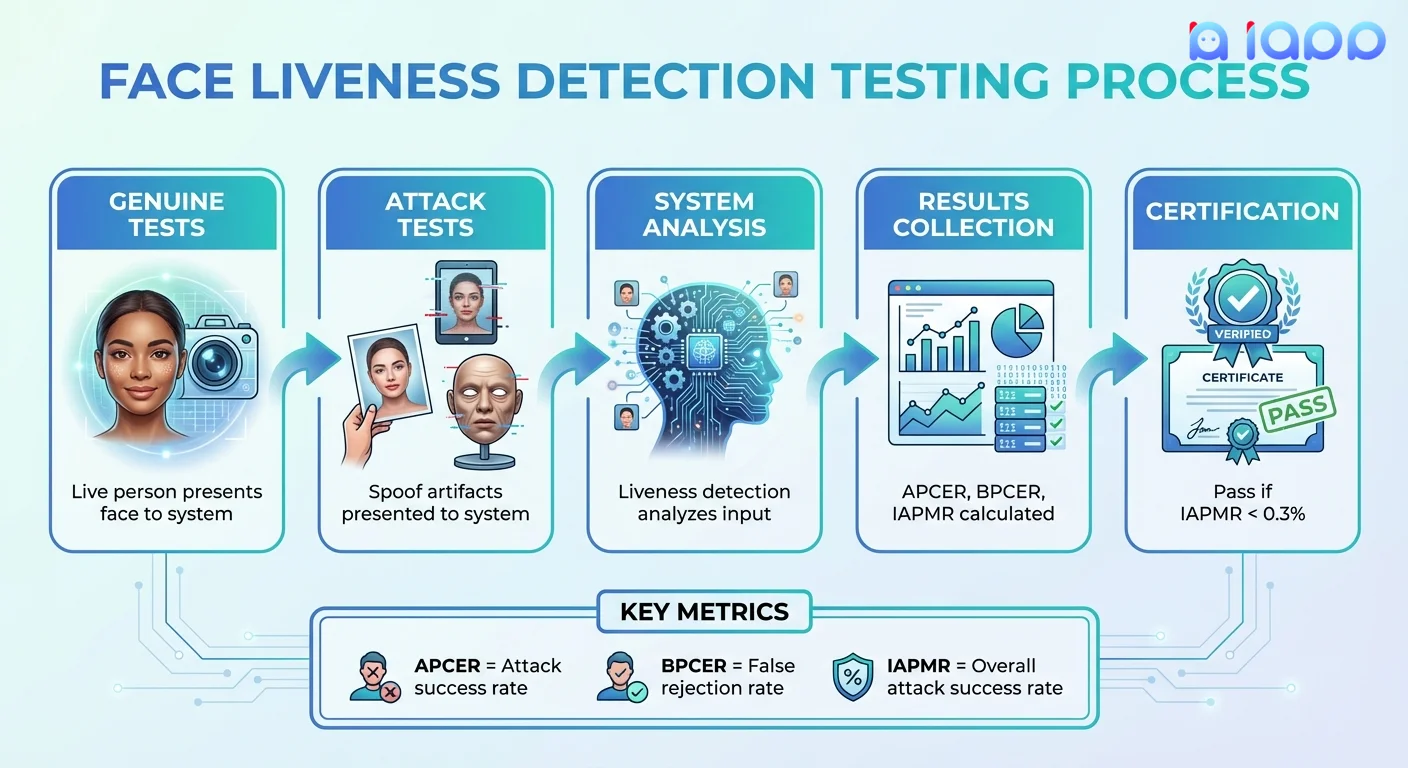
กระบวนการทดสอบ
1. Genuine Presentations (การทดสอบใบหน้าจริง)
- คนจริงแสดงใบหน้าต่อระบบ
- ทดสอบสถานการณ์การใช้งานปกติ
- วัดอัตราการปฏิเสธผิดพลาด (BPCER)
2. Attack Presentations (การทดสอบการปลอมแปลง)
- ผู้ทดสอบพยายามหลอกระบบด้วยใบหน้าปลอม
- ทดสอบหลายประเภทการโจมตี
- วัดอัตราความสำเร็จของการโจมตี (APCER)
3. การคำนวณผลลัพธ์
- คำนวณ APCER และ BPCER สำหรับแต่ละประเภทการโจมตี
- คำนวณ IAPMR (อัตราความสำเร็จการโจมตีโดยรวม)
- ระบบต้องได้ < 0.3% IAPMR เพื่อผ่าน
4. การรับรอง
- หากระบบผ่าน iBeta จะออกจดหมายยืนยัน
- ผลลัพธ์เผยแพร่บนเว็บไซต์ iBeta
- บริษัทสามารถอ้าง "iBeta PAD Level X Certified"
ระดับการทดสอบ PAD: Level 1 vs Level 2
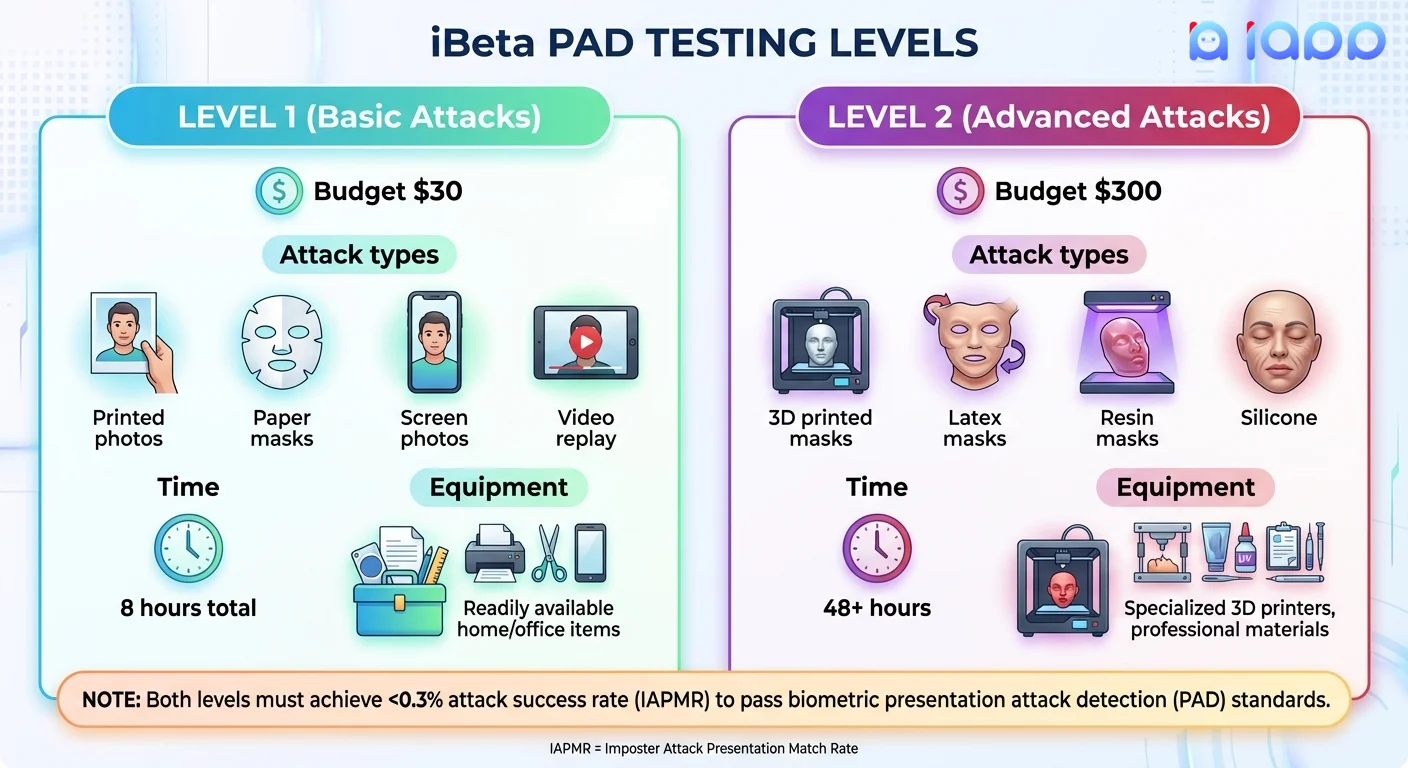
iBeta เสนอการทดสอบ PAD สองระดับ แต่ละระดับจำลองความสามารถของผู้โจมตีที่แตกต่างกัน:
Level 1 — การโจมตีพื้นฐาน
งบประมาณ: $30 ต่อสิ่งประดิษฐ์การโจมตี เวลา: การโจมตีทั้งหมด 150 ครั้งเสร็จภายใน 8 ชั่วโมง อุปกรณ์: สิ่งของที่หาได้ง่ายในบ้าน/สำนักงาน
ประเภทการโจมตี:
- รูปถ่ายพิมพ์: รูปถ่ายความละเอียดสูงพิมพ์บนกระดาษ
- หน้ากากกระดาษ: รูปใบหน้าที่ตัดออกมาพร้อมช่องตา
- รูปบนหน้าจอ: ใบหน้าแสดงบนโทรศัพท์/แท็บเล็ต/จอภาพ
- วิดีโอเล่นซ้ำ: เล่นวิดีโอของบุคคลเป้าหมาย
ใครต้องการ Level 1:
- แอปที่ต้องการการยืนยันตัวตนพื้นฐาน
- ธุรกรรมความเสี่ยงต่ำ
- แอปพลิเคชันผู้บริโภคทั่วไป
Level 2 — การโจมตีขั้นสูง
งบประมาณ: $300 ต่อสิ่งประดิษฐ์การโจมตี เวลา: 48+ ชั่วโมงสำหรับการสร้างสิ่งประดิษฐ์ (6 subjects) อุปกรณ์: เครื่องมือพิเศษรวมถึงเครื่องพิมพ์ 3 มิติ
ประเภทการโจมตี (รวมทุกอย่างใน Level 1 บวก):
- หน้ากากพิมพ์ 3 มิติ: แบบจำลองใบหน้าพิมพ์แบบกำหนดเอง
- หน้ากากลาเท็กซ์: หน้ากากใบหน้ายืดหยุ่นสมจริง
- หน้ากากเรซิน: แบบจำลองใบหน้าหล่อรายละเอียด
- หน้ากากซิลิโคน: หน้ากากคุณภาพระดับ prosthetic
ใครต้องการ Level 2:
- บริการธนาคารและการเงิน
- ระบบตัวตนภาครัฐ
- การควบคุมการเข้าถึงความปลอดภัยสูง
- ข้อกำหนดการปฏิบัติตามกฎระเบียบ
เกณฑ์ผ่าน/ไม่ผ่าน
เพื่อผ่านระดับใดก็ตาม ระบบต้องได้:
- IAPMR (Impostor Attack Presentation Match Rate) < 0.3% — การโจมตีน้อยกว่า 0.3% สำเร็จ
- BPCER (Bona Fide Presentation Classification Error Rate) < 15% — ผู้ใช้จริงน้อยกว่า 15% ถูกปฏิเสธ
คำศัพท์สำคัญที่อธิบาย (อธิบายศัพท์เทคนิค)
1. Presentation Attack (การโจมตีแบบนำเสนอ)
คืออะไร: ความพยายามใดๆ ที่จะแทรกแซงระบบไบโอเมตริกโดยใช้ตัวอย่างไบโอเมตริกปลอมหรือดัดแปลง
อธิบายง่ายๆ: การพยายามหลอกระบบจดจำใบหน้าโดยนำเสนอสิ่งอื่นที่ไม่ใช่ใบหน้าจริงมีชีวิตของคุณ — เช่น รูปถ่าย วิดีโอ หรือหน้ากากของคนอื่น
ประเภทของ presentation attacks:
- การโจมตีด้วยรูปถ่าย: รูปถ่ายพิมพ์หรือดิจิทัล
- การโจมตีด้วยวิดีโอ: วิดีโอที่บันทึกไว้หรือเล่นสด
- การโจมตีด้วยหน้ากาก: หน้ากากกระดาษ 2 มิติหรือหน้ากากทางกายภาพ 3 มิติ
- การโจมตีด้วยเครื่องสำอาง: ใช้เครื่องสำอางเพื่อเปลี่ยนแปลงรูปลักษณ์
2. Liveness Detection (การตรวจจับความมีชีวิต)
คืออะไร: เทคโนโลยีที่พิจารณาว่าตัวอย่างไบโอเมตริกมาจากคนที่มีชีวิตอยู่ ณ จุดจับภาพหรือไม่
อธิบายง่ายๆ: ระบบตรวจสอบว่ามีมนุษย์จริงมีชีวิตอยู่หน้ากล้อง — ไม่ใช่รูปถ่าย วิดีโอ หรือหน้ากาก
สองประเภท:
- Active Liveness: ผู้ใช้ต้องทำการกระทำ (กระพริบตา ยิ้ม หมุนศีรษะ)
- Passive Liveness: ระบบตรวจจับความมีชีวิตโดยไม่ต้องมีการกระทำจากผู้ใช้ (ที่ iApp ใช้)
3. APCER (Attack Presentation Classification Error Rate)
คืออะไร: เปอร์เซ็นต์ของ presentation attacks ที่ถูกจัดประเภทผิดว่าเป็นของแท้
อธิบายง่ายๆ: ระบบถูกหลอกด้วยใบหน้าปลอมบ่อยแค่ไหน ยิ่งต่ำยิ่งดี
สูตร: APCER = (จำนวนการโจมตีที่สำเร็จ) / (ความพยายามโจมตีทั้งหมด) × 100%
ตัวอย่าง: หาก 3 จาก 1,000 การโจมตีด้วยรูปถ่ายสำเร็จ APCER สำหรับรูปถ่าย = 0.3%
4. BPCER (Bona Fide Presentation Classification Error Rate)
คืออะไร: เปอร์เซ็นต์ของ genuine presentations ที่ถูกปฏิเสธผิดพลาด
อธิบายง่ายๆ: ระบบปฏิเสธผู้ใช้จริงบ่อยแค่ไหน ยิ่งต่ำยิ่งดี
สูตร: BPCER = (ความพยายามจริงที่ถูกปฏิเสธ) / (ความพยายามจริงทั้งหมด) × 100%
ตัวอย่าง: หาก 50 จาก 1,000 ผู้ใช้จริงถูกปฏิเสธ BPCER = 5%
5. IAPMR (Impostor Attack Presentation Match Rate)
คืออะไร: อัตราโดยรวมที่ attack presentations ถูกยอมรับผิดพลาดโดยระบบข้ามทุกประเภทการโจมตี
อธิบายง่ายๆ: อัตราความสำเร็จรวมของการโจมตีปลอมแปลงทั้งหมด นี่คือตัวชี้วัดหลักสำหรับการรับรอง iBeta — ต้องต่ำกว่า 0.3% เพื่อผ่าน
ทำไมสำคัญ: แม้ระบบจะบล็อกการโจมตีด้วยรูปถ่าย 99% แต่ล้มเหลวกับการโจมตีด้วยวิดีโอ IAPMR โดยรวมก็ยังสูงได้
ทำไมการรับรอง iBeta ถึงสำคัญ
1. การยืนยันโดยอิสระ
iBeta เป็นบุคคลที่สามที่เป็นอิสระโดยไม่มีผลประโยชน์ทางการเงินในผลลัพธ์ การรับรองจาก NIST หมายความว่ากระบวนการทดสอบของพวกเขาถูกตรวจสอบและยืนยัน
2. การทดสอบมาตรฐาน
การปฏิบัติตาม ISO/IEC 30107-3 รับประกันการทดสอบที่สอดคล้องและทำซ้ำได้ คุณสามารถเปรียบเทียบระบบต่างๆ ได้อย่างยุติธรรมเพราะทดสอบในลักษณะเดียวกัน
3. การจำลองการโจมตีในโลกจริง
ผู้ทดสอบ iBeta ใช้เทคนิคการปลอมแปลงจริงที่ผู้ฉ้อโกงอาจใช้ การผ่านหมายความว่าระบบสามารถป้องกันการโจมตีในทางปฏิบัติ
4. การปฏิบัติตามกฎระเบียบ
หลายอุตสาหกรรมกำหนดให้ระบบไบโอเมตริกต้องเป็นไปตามมาตรฐานความปลอดภัยเฉพาะ:
- ธนาคาร: ข้อกำหนด Know Your Customer (KYC)
- ภาครัฐ: การออกเอกสารตัวตน
- สาธารณสุข: การยืนยันตัวตนผู้ป่วย
- การเงิน: การปฏิบัติตาม Anti-money laundering (AML)
5. ความน่าเชื่อถือและความไว้วางใจ
ป้ายการรับรอง iBeta แสดงให้ลูกค้าเห็นว่าระบบได้รับการทดสอบอย่างเข้มงวดและเป็นไปตามมาตรฐานความปลอดภัยระดับนานาชาติ
การรับรอง iBeta แก้ปัญหาอะไร?
| ปัญหา | ไม่มีการรับรอง | มีการรับรอง iBeta |
|---|---|---|
| การโจมตีด้วยรูปถ่าย | อาจถูกหลอกด้วยรูปถ่ายพิมพ์ | ยืนยันแล้วว่าตรวจจับและปฏิเสธได้ |
| การเล่นซ้ำวิดีโอ | เปราะบางต่อการเล่นบนหน้าจอ | ทดสอบแล้วกับการโจมตีด้วยวิดีโอ |
| การโจมตีด้วยหน้ากาก | ความต้านทานไม่ทราบ | Level 2 ทดสอบหน้ากาก 3D/latex |
| การปฏิบัติตามกฎระเบียบ | ยากที่จะพิสูจน์ความปลอดภัย | การยืนยันจากบุคคลที่สาม |
| ความไว้วางใจของลูกค้า | คำอ้าง "เราปลอดภัย" ไม่ได้รับการยืนยัน | การรับรองจากห้องปฏิบัติการอิสระ |
| การป้องกันการฉ้อโกง | ประสิทธิภาพไม่ทราบ | วัดได้ < 0.3% ความสำเร็จของการโจมตี |
การรับรอง iBeta ของ iApp Technology
ระบบ Face Passive Liveness Detection ของ iApp Technology ได้รับ การรับรอง iBeta PAD Level 1 แสดงให้เห็นว่า:
ผลการทดสอบ
- ความแม่นยำ 99.43% จากการทดสอบ 7,680 ครั้ง
- < 0.3% IAPMR — ผ่านข้อกำหนด ISO/IEC 30107-3
- ตรวจจับรูปถ่ายพิมพ์ การแสดงบนหน้าจอ หน้ากากกระดาษ และการเล่นซ้ำวิดีโอได้สำเร็จ
สิ่งนี้หมายความว่าอะไรสำหรับผู้ใช้
- ความปลอดภัยระดับธนาคาร สำหรับการยืนยันตัวตน
- การตรวจจับแบบ passive — ไม่ต้องให้ผู้ใช้กระพริบตาหรือหมุนศีรษะ
- การประมวลผลเร็ว — ผลลัพธ์ในเวลาน้อยกว่า 0.4 วินาที
- ยืนยันในระดับนานาชาติ — ไม่ใช่แค่การอ้างด้วยตัวเอง
ดูใบรับรอง
วิธีใช้ Liveness Detection ที่ได้รับการรับรอง iBeta ของ iApp
APIs ที่มี
| บริการ | คำอธิบาย | การรับรอง |
|---|---|---|
| Face Passive Liveness | ตรวจจับการปลอมแปลงจากภาพเดียว | iBeta Level 1 |
| Face Verification | เปรียบเทียบใบหน้าสองใบเพื่อจับคู่ตัวตน | ตาม ISO 19795 |
| Face Detection | ตรวจจับและระบุตำแหน่งใบหน้าในรูปภาพ | ความแม่นยำสูง |
ตัวอย่าง: การตรวจจับ Face Liveness
import requests

def check_face_liveness(image_path, api_key):
    """
    ตรวจสอบว่าภาพใบหน้ามาจากคนจริงหรือการโจมตีปลอมแปลง
    ความแม่นยำได้รับการรับรอง iBeta Level 1
    """
    response = requests.post(
        'https://api.iapp.co.th/v3/store/ekyc/face-passive-liveness',
        headers={'apikey': api_key},
        files={'file': open(image_path, 'rb')}
    )

    result = response.json()

    return {
        'is_real': result['predict'] == 'REAL',
        'is_spoof': result['predict'] == 'SPOOF',
        'confidence': result['score'],
        'processing_time': result['duration']
    }

# ตัวอย่างการใช้งาน
result = check_face_liveness('selfie.jpg', 'YOUR_API_KEY')

if result['is_real']:
    print(f"✓ ตรวจจับใบหน้าจริง (ความมั่นใจ: {result['confidence']:.2%})")
else:
    print(f"✗ ตรวจจับการปลอมแปลง! (ความมั่นใจ: {result['confidence']:.2%})")
ตัวอย่าง: ขั้นตอน eKYC สมบูรณ์พร้อม Liveness
import requests

def verify_identity_with_liveness(id_card_image, selfie_image, api_key):
    """
    การยืนยัน eKYC สมบูรณ์:
    1. สกัดข้อมูลจากบัตรประชาชน (OCR)
    2. ตรวจสอบ liveness ของเซลฟี่ (ได้รับการรับรอง iBeta)
    3. เปรียบเทียบใบหน้า (verification)
    """

    # ขั้นตอนที่ 1: OCR บัตรประชาชน
    ocr_result = requests.post(
        'https://api.iapp.co.th/thai-national-id-ocr/v3',
        headers={'apikey': api_key},
        files={'file': open(id_card_image, 'rb')}
    ).json()

    # ขั้นตอนที่ 2: ตรวจสอบ liveness ของเซลฟี่ (ได้รับการรับรอง iBeta Level 1)
    liveness_result = requests.post(
        'https://api.iapp.co.th/v3/store/ekyc/face-passive-liveness',
        headers={'apikey': api_key},
        files={'file': open(selfie_image, 'rb')}
    ).json()

    if liveness_result['predict'] == 'SPOOF':
        return {'success': False, 'error': 'ตรวจจับการโจมตีปลอมแปลง'}

    # ขั้นตอนที่ 3: เปรียบเทียบรูปในบัตรกับเซลฟี่
    verification_result = requests.post(
        'https://api.iapp.co.th/face-verification',
        headers={'apikey': api_key},
        files={
            'image1': open(id_card_image, 'rb'),
            'image2': open(selfie_image, 'rb')
        }
    ).json()

    return {
        'success': True,
        'person_name': ocr_result.get('name_th'),
        'id_number': ocr_result.get('id_number'),
        'face_match': verification_result.get('match'),
        'liveness_verified': True
    }

# ตัวอย่างการใช้งาน
result = verify_identity_with_liveness(
    'thai_id_card.jpg',
    'live_selfie.jpg',
    'YOUR_API_KEY'
)
print(result)
เริ่มต้นใช้งาน
สำหรับผู้ใช้ธุรกิจ
รวม liveness detection ที่ได้รับการรับรอง iBeta เข้ากับแอปพลิเคชันของคุณ:
- สมัคร: รับ API key ของคุณ
- เลือก API: Face Passive Liveness สำหรับการตรวจจับการปลอมแปลง
- เชื่อมต่อ: REST API ง่ายๆ ทำงานกับภาษาใดก็ได้
- ใช้งานจริง: เพิ่มความปลอดภัยในขั้นตอนการยืนยันตัวตนของคุณ
แหล่งข้อมูล
- เอกสาร API: Face Passive Liveness API
- Face Verification: Face Verification API
- eKYC สมบูรณ์: โซลูชัน eKYC
- ดูใบรับรอง: จดหมายยืนยัน iBeta
- เข้าร่วมชุมชน: Discord
สรุป
การทดสอบไบโอเมตริก iBeta คือมาตรฐานทองคำสำหรับการยืนยันระบบ face liveness detection เมื่อคุณเห็น "iBeta Level 1 Certified" หรือ "iBeta Level 2 Certified" หมายความว่าห้องปฏิบัติการอิสระที่ได้รับการรับรอง NIST ได้ทดสอบระบบกับการโจมตีปลอมแปลงในโลกจริงและยืนยันว่าเป็นไปตามมาตรฐานความปลอดภัยระดับนานาชาติ (ISO/IEC 30107-3)
Face Passive Liveness Detection ของ iApp Technology ได้รับ การรับรอง iBeta PAD Level 1 พิสูจน์ว่าสามารถตรวจจับและปฏิเสธการโจมตีด้วยรูปถ่าย การเล่นซ้ำวิดีโอ หน้ากากกระดาษ และการแสดงบนหน้าจอด้วยความแม่นยำมากกว่า 99% — ให้แอปพลิเคชันของคุณมีความปลอดภัยระดับธนาคารสำหรับการยืนยันตัวตน
พร้อมที่จะเพิ่ม liveness detection ที่ได้รับการรับรอง iBeta ในแอปพลิเคชันของคุณ? สมัครฟรี และเริ่มใช้ APIs ที่ได้รับการรับรองของเราวันนี้!
มีคำถาม? เข้าร่วม Discord Community หรืออีเมลหาเราที่ support@iapp.co.th
iApp Technology Co., Ltd. บริษัท AI ชั้นนำของประเทศไทย | ได้รับการรับรอง iBeta PAD Level 1
แหล่งที่มา: